Design Principles for Small Outdoor Spaces
Create Defined Zones
- A dining or seating area with a small patio or gravel pad
- A planting zone with layered beds along the fence line
- A functional zone for a fire pit, play area, or outdoor storage
Use Vertical Space
- Train climbing plants like Carolina jessamine or crossvine on trellises along fences
- Use tall, narrow planters instead of wide, ground-level beds
- Install a vertical herb garden on a sunny wall
- Hang string lights or lanterns overhead to draw the eye upward and make the space feel taller
Keep Sightlines Open
5 Small Yard Landscape Ideas That Work in North Texas
1. The Low-Maintenance Native Garden
- Texas Sage (Leucophyllum frutescens): Drought-tolerant, purple blooms after rain, grows 4 to 6 feet tall. Works well as a natural screen along a fence line.
- Flame Acanthus: Bright red tubular flowers that attract hummingbirds. Handles full sun and poor soil.
- Gulf Muhly Grass: Ornamental grass with pink plumes in fall. Low-growing, clumps well, needs almost no supplemental watering once established.
- Blackfoot Daisy: Compact perennial with white blooms. Perfect for borders and edging.
- Turk’s Cap: Shade-tolerant, red flowers, spreads naturally to fill gaps.
2. The Patio-Forward Design
- Install a paver or flagstone patio covering 40 to 60 percent of the yard
- Border the patio with raised planting beds (12 to 18 inches tall) filled with ornamental grasses and seasonal color
- Add a built-in bench or low seating wall to save space that chairs would normally take
- Use container plants in decorative pots to add greenery without permanent planting beds
3. The Layered Border Garden
- Back layer (along the fence): Tall plants like Yaupon Holly (trimmed to 6 to 8 feet), Crape Myrtle, or Wax Myrtle for screening and height
- Middle layer: Medium shrubs like Dwarf Yaupon Holly, Abelia, or Indian Hawthorn for fullness and texture
- Front layer: Low groundcover or border plants like Liriope, Asiatic Jasmine, or Purple Heart
4. The Gravel and Stone Courtyard
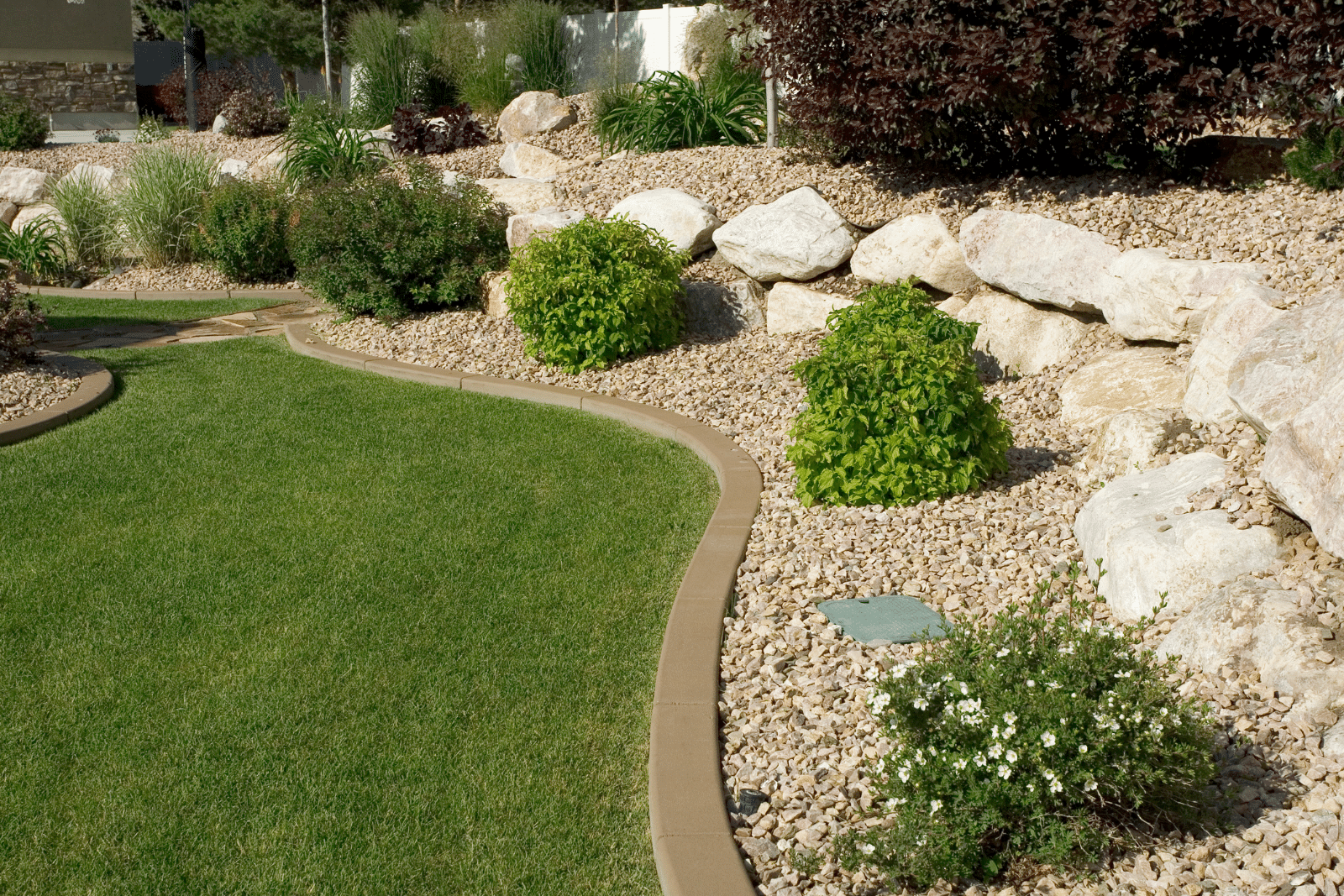
- Decomposed granite base with stepping stone pathways
- 2 to 3 strategically placed large boulders or decorative rocks
- Drought-tolerant plantings in clusters (agave, yucca, ornamental grasses)
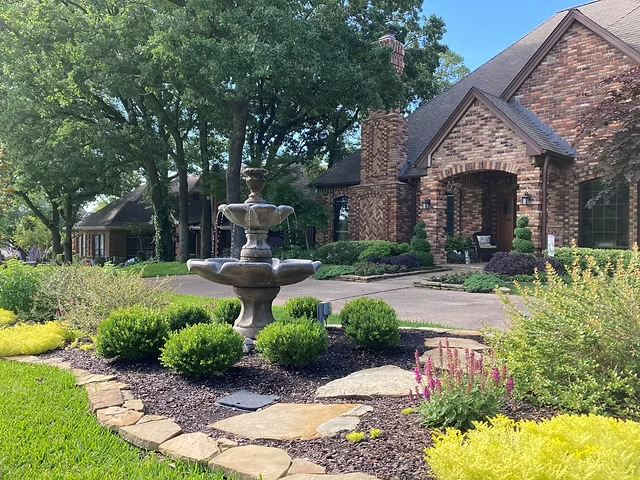
- A small water feature or decorative pot as a centerpiece
- String lights or landscape lighting to define the space at night
5. The Functional Family Yard
- Replace a large play structure with a compact climbing feature or sandbox that fits in a corner
- Use artificial turf in high-traffic play areas. It stays green year-round and handles heavy use better than natural grass in a confined space.
- Create a defined play area with landscape borders so the rest of the yard stays maintained
- Include a small raised garden bed for growing herbs or vegetables. It takes up minimal space and doubles as a learning tool for kids.