Summer in the Dallas-Fort Worth Metroplex is not subtle. Temperatures regularly push past 100 degrees from late June through August, and the combination of relentless sun, clay soil, and sporadic rainfall makes it one of the toughest stretches of the year for any lawn. If your yard is not prepared before the heat sets in, you will spend the rest of the season watching brown patches spread while your water bill climbs.
The good news is that a few weeks of focused preparation in May and early June can make the difference between a lawn that survives summer and one that actually thrives through it. Whether you are in Southlake, Grapevine, Keller, or anywhere else in the Mid-Cities, this guide covers exactly what to do, when to do it, and which mistakes to avoid.
If you followed a spring lawn care checklist earlier this year, you already have a head start. This guide picks up where spring left off and gets your lawn ready for the hottest months ahead.
Why Summer Preparation Matters in North Texas
North Texas lawns face a unique combination of stressors that most other regions do not deal with at the same time:
- Extended heat: DFW averages 15 to 20 days above 100 degrees each summer. Soil temperatures can exceed 90 degrees at the surface, which stresses root systems even on healthy lawns.
- Heavy clay soil: Most of the DFW Metroplex sits on Blackland Prairie or Grand Prairie clay soils. These soils retain moisture when wet but crack and harden when dry, which damages roots and makes water absorption inconsistent.
- Water restrictions: Many North Texas municipalities enforce twice-per-week watering schedules during summer. That means every watering session has to count.
- Warm-season grass dormancy threshold: Bermuda, St. Augustine, and Zoysia grasses thrive in heat up to a point, but extended drought and temperatures above 95 degrees can push even warm-season varieties into stress or partial dormancy.
Preparing your lawn before these conditions arrive gives the root system, soil structure, and grass blades the best chance of handling the stress without permanent damage.
Adjust Your Mowing Height for Summer
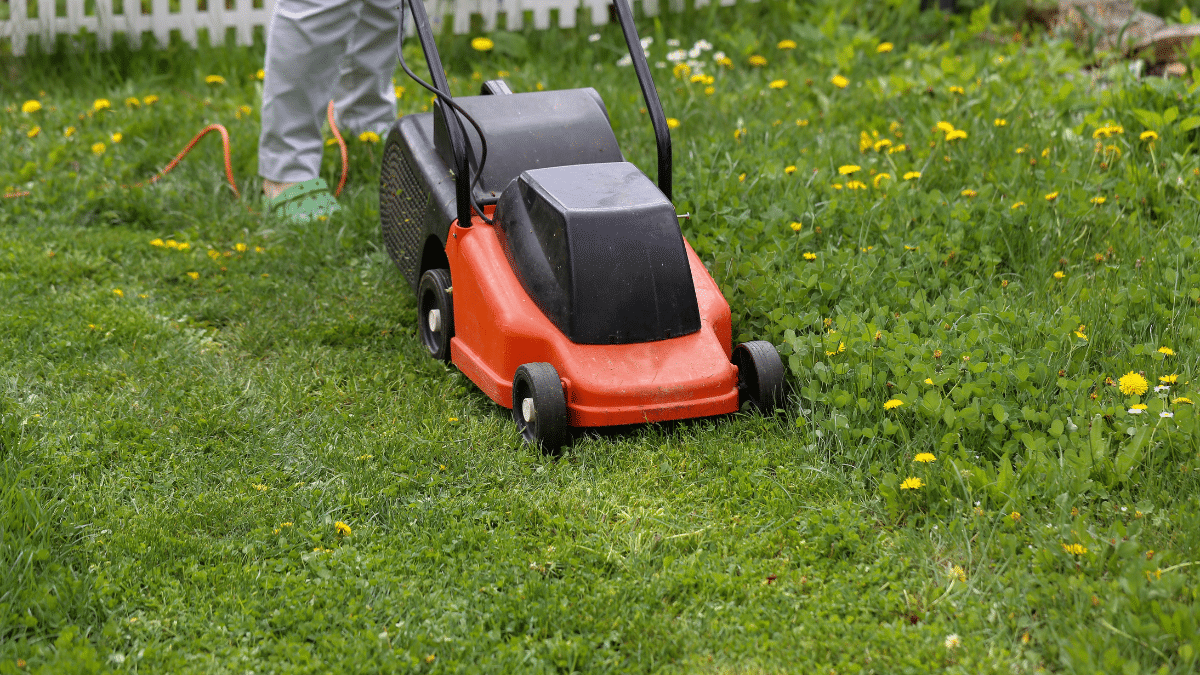
One of the simplest and most effective summer lawn care tips for Texas homeowners is to raise your mowing height. Taller grass blades shade the soil, which reduces moisture evaporation and keeps root-zone temperatures lower.
Recommended Summer Mowing Heights by Grass Type
- Bermuda grass: Raise from 1.5 inches (spring setting) to 2 to 2.5 inches for summer. Bermuda is the most heat-tolerant grass in North Texas, but even Bermuda benefits from slightly taller blades during peak heat.
- St. Augustine: Maintain at 3.5 to 4 inches. St. Augustine naturally grows taller and needs that height to protect its broader leaf blades from sun scorch. Cutting below 3 inches during summer almost guarantees thinning and brown patches.
- Zoysia: Raise to 2.5 to 3 inches. Zoysia is dense and handles heat well, but the extra height helps it compete with summer weeds.
Mowing Best Practices for Summer
- Follow the one-third rule: never remove more than one-third of the grass blade height in a single mow. If you let the lawn get too tall between mowings, you will shock the grass by cutting too much at once.
- Mow in the early morning or late evening when temperatures are lower. Mowing during peak heat (11 a.m. to 4 p.m.) stresses both you and the grass.
- Keep mower blades sharp. Dull blades tear grass instead of cutting it cleanly, which creates ragged tips that lose moisture faster and are more vulnerable to disease.
- Leave grass clippings on the lawn. They decompose quickly and return nitrogen to the soil. This is called grasscycling, and the Texas A&M AgriLife Extension recommends it as a way to reduce fertilizer needs by up to 25 percent.
<img decoding="async" class="aligncenter wp-image-1213 size-full" src="/images/blog/summer-watering-lawn-north-texas.jpg.png" alt="A backyard lawn being watered by a sprinkler, with sunlight shining through the water spray and illuminating the green grass—a perfect example of how to prepare lawn for summer. A wooden fence and trees are visible in the background." width="1200" height="675" srcset="/images/blog/summer-watering-lawn-north-texas.jpg.png 1200w, /images/blog/summer-watering-lawn-north-texas.jpg-980x551.png 980w, /images/blog/summer-watering-lawn-north-texas.jpg-480x270.png 480w" sizes="(min-width: 0px) and (max-width: 480px) 480px, (min-width: 481px) and (max-width: 980px) 980px, (min-width: 981px) 1200px, 100vw" />
Dial In Your Watering Schedule
Watering is where most DFW homeowners either waste money or leave their lawn short. The goal is deep, infrequent watering that encourages roots to grow down into cooler soil layers rather than staying near the surface.
How Much Water Your Lawn Needs
Most warm-season grasses in North Texas need about 1 to 1.5 inches of water per week during summer. This includes any rainfall you receive. Here is how to measure it:
- Place a few empty tuna cans or rain gauges around your yard before running the sprinklers.
- Run your system on one zone and check the cans after 15 minutes.
- If the cans collected about a quarter inch, you know that zone needs roughly 60 minutes of total run time per week to deliver 1 inch of water.
- Split that time across your two allowed watering days.
According to the EPA WaterSense program, the average American household uses nearly 9,000 gallons of water per year on landscape irrigation. Proper scheduling prevents waste while keeping your lawn healthy.
When to Water
Water between 4 a.m. and 10 a.m. Early morning watering allows the grass to absorb moisture before the heat of the day causes rapid evaporation. Watering in the evening keeps grass blades wet overnight, which promotes fungal growth.
Signs of Underwatering vs. Overwatering
- Underwatered lawn: Grass blades fold in half lengthwise (especially visible on St. Augustine), footprints remain visible after walking on the lawn, and the color shifts from green to a blue-gray tint.
- Overwatered lawn: Spongy or mushy soil, visible fungus or mushrooms, yellowing grass blades, and a persistent musty smell near the turf.
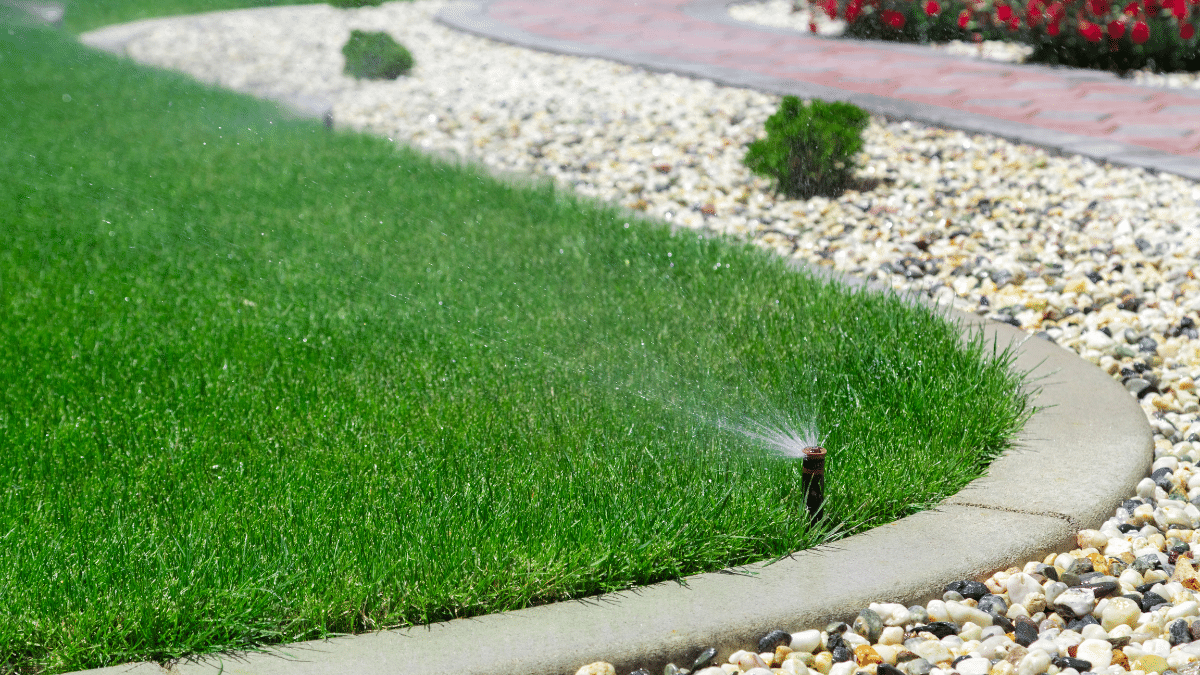
If your lawn shows signs of underwatering but you are already maxing out your allowed watering days, focus on improving irrigation efficiency. Check for broken sprinkler heads, adjust spray patterns to avoid watering sidewalks and driveways, and consider adding drip irrigation to flower beds so the sprinkler system can focus on turf.
Fertilize Strategically Before Peak Heat
Summer fertilization in North Texas follows a different strategy than spring. The goal is not to push aggressive top growth. Instead, you want to support root health and stress tolerance.
When to Apply Summer Fertilizer
- Late May to early June: Apply a slow-release nitrogen fertilizer before temperatures consistently exceed 95 degrees. This gives the grass a nutrient boost that carries it into July without forcing the kind of rapid blade growth that increases water demand.
- Avoid fertilizing in July and August unless your lawn shows clear signs of nutrient deficiency (uniform yellowing across the entire lawn, not just patches). Fertilizing during extreme heat forces the grass to grow when it should be conserving energy.
What to Use
- For Bermuda grass: A balanced slow-release fertilizer with a ratio like 15-5-10 or 21-0-0 (ammonium sulfate) works well. Apply at the rate specified on the bag.
- For St. Augustine: Use a fertilizer with iron (Fe) added. St. Augustine is prone to iron chlorosis in alkaline North Texas soils, which shows up as yellowing between the leaf veins. A product labeled for “iron-rich” or “southern lawns” addresses this.
- For Zoysia: A slow-release 16-4-8 applied at half the bag rate is sufficient. Zoysia does not need as much nitrogen as Bermuda.
Always water in the fertilizer within 24 hours of application. Granular fertilizer sitting on dry grass in 100-degree heat can burn the blades.
Address Soil Compaction Before It Gets Worse
North Texas clay soil compacts easily, especially in areas with foot traffic, pet activity, or heavy equipment. Compacted soil prevents water and air from reaching the root zone, which means even perfect watering and fertilization will not help if the soil is locked up.
When to Aerate
For Bermuda and Zoysia lawns, late May through June is the ideal window for core aeration. The grass is in its peak growing season and will recover quickly from the process. For St. Augustine, aerate in late spring before the most intense heat arrives.
How Aeration Helps Summer Survival
- Breaks up compacted clay so water penetrates deeper instead of running off
- Allows oxygen to reach root systems that are working harder in the heat
- Reduces thatch buildup that insulates soil and raises surface temperatures
- Improves the effectiveness of every watering session
If your lawn has not been aerated in the past 12 months and the soil feels hard when you push a screwdriver into it, aeration should be a priority before summer heat peaks.
Manage Weeds Before They Take Over
Summer weeds in North Texas include crabgrass, dallisgrass, nutsedge, and spurge. If you applied a pre-emergent herbicide in early spring, you should have a head start. But pre-emergent barriers break down over time, and summer weeds are aggressive.
Summer Weed Management Tips
- Spot-treat with post-emergent herbicide rather than broadcast-spraying. Blanket applications of herbicide during summer heat stress the turf along with the weeds.
- Target nutsedge early. Nutsedge (the bright green, shiny blades that grow faster than the surrounding grass) requires a selective herbicide like sulfentrazone or halosulfuron-methyl. Standard broadleaf herbicides will not kill it.
- Hand-pull small infestations of spurge and other annual weeds before they set seed. One spurge plant can produce thousands of seeds that will germinate next spring.
- Maintain thick, healthy turf. The best weed defense is a dense lawn. Bare spots from heat stress or underwatering are open invitations for weeds to move in.
Protect Your Lawn from Common Summer Diseases
Hot, humid conditions in DFW create the perfect environment for fungal diseases. The most common ones affecting North Texas lawns are:
- Brown Patch (Rhizoctonia): Circular brown patches, usually 1 to 3 feet in diameter, that appear in St. Augustine lawns when nighttime temps stay above 70 degrees and humidity is high. Reduce evening watering and avoid excess nitrogen to manage it.
- Take-All Root Rot (TARR): Yellowing and thinning in St. Augustine, especially in shaded or poorly drained areas. This is a soil-borne disease that requires fungicide treatment and improved drainage.
- Dollar Spot: Small, silver-dollar-sized brown spots on Bermuda and Zoysia. Usually caused by low nitrogen levels and morning dew sitting on the blades too long.
Prevention is easier than treatment. Water in the morning, maintain proper fertility, and avoid over-irrigating. If you see disease symptoms spreading, a targeted fungicide application can stop it before it damages large sections of the lawn.
Prepare Your Irrigation System
Your sprinkler system is the lifeline of your lawn during a DFW summer. A system that is not operating efficiently can waste water on the driveway while leaving sections of your yard bone dry.
Summer Irrigation Checklist
- Run each zone manually and watch for broken heads, misaligned spray patterns, and low-pressure zones.
- Check for clogged nozzles, especially on rotor heads that cover larger areas. A single clogged rotor can leave a 15-foot dry spot.
- Adjust your controller for summer run times. Spring settings are typically insufficient for July and August heat.
- Inspect drip zones in flower beds and around trees. Drip emitters clog easily and fail silently.
- Consider adding a smart controller or rain sensor if you do not already have one. Smart controllers adjust watering based on weather data and can save 20 to 30 percent on outdoor water use.
Create a Summer Lawn Care Schedule for DFW
Here is a month-by-month summary of what to focus on through the summer months in North Texas:
May
- Raise mowing height to summer settings
- Apply slow-release fertilizer (Bermuda, Zoysia) or iron-rich fertilizer (St. Augustine)
- Core aerate if not done in spring
- Inspect and tune irrigation system
- Spot-treat emerging summer weeds
June
- Increase watering frequency to twice per week (per local restrictions)
- Monitor for brown patch and other fungal diseases
- Continue weekly mowing at summer height
- Apply post-emergent herbicide for nutsedge if needed
July and August
- Focus on water management and mowing consistency
- Avoid fertilizing unless the lawn shows clear nutrient deficiency
- Do not aerate, dethatch, or perform any heavy lawn work during peak heat
- Watch for grub activity (irregular brown patches that pull up easily like carpet)
- Allow the lawn to go slightly dormant if water restrictions make full irrigation impossible. It will recover in September.
When to Call a Professional
Some summer lawn care tasks are straightforward enough to handle on your own. Adjusting mowing height, checking sprinkler heads, and spot-treating weeds are manageable for most homeowners. But certain situations benefit from professional help:
- Persistent disease issues that are not responding to over-the-counter fungicides
- Irrigation system repairs or zone additions
- Core aeration (requires specialized equipment most homeowners do not own)
- Full-season fertilization and weed control programs that require precise timing and product selection
- Large lawns or properties where consistent weekly mowing is time-consuming
Goat Kings Landscaping provides complete lawn care services for residential properties throughout Southlake, Grapevine, Keller, Colleyville, and the surrounding DFW communities. From weekly mowing to seasonal fertilization programs, our team handles the work so your lawn stays healthy through the summer and beyond.
Frequently Asked Questions
How often should I water my lawn in summer in North Texas?
Most DFW lawns need about 1 to 1.5 inches of water per week during summer. With typical twice-per-week watering restrictions, that means running each sprinkler zone for 30 to 45 minutes per watering day, depending on your system’s output. Water between 4 a.m. and 10 a.m. for best results.
Should I let my lawn go dormant in summer?
Bermuda grass can handle brief dormancy periods and will recover once temperatures cool and moisture returns. St. Augustine is less tolerant of extended dormancy and may thin permanently if left without water for more than 3 to 4 weeks in extreme heat. If water restrictions prevent adequate irrigation, focus available water on St. Augustine areas first.
Can I fertilize my lawn in July in Texas?
It is generally best to avoid fertilizing in July and August in North Texas. Applying nitrogen during extreme heat forces the grass to produce new growth when it should be conserving energy and water. If your lawn needs a nutrient boost mid-summer, use a light application of iron supplement rather than a full nitrogen fertilizer.
What is the best grass type for DFW summers?
Bermuda grass is the most heat-tolerant and drought-resistant option for full-sun DFW lawns. Zoysia is a close second and offers a denser texture. St. Augustine works well in partially shaded yards but requires more water during summer. Your best choice depends on your yard’s sun exposure, irrigation capacity, and how much foot traffic the lawn receives.
How do I prevent brown patches in summer?
Brown patch disease thrives when nighttime temperatures stay above 70 degrees and the grass stays wet overnight. Prevent it by watering only in the early morning, avoiding excess nitrogen fertilization in late spring, and maintaining proper mowing height. If brown patch appears, treat with a fungicide containing azoxystrobin or propiconazole.