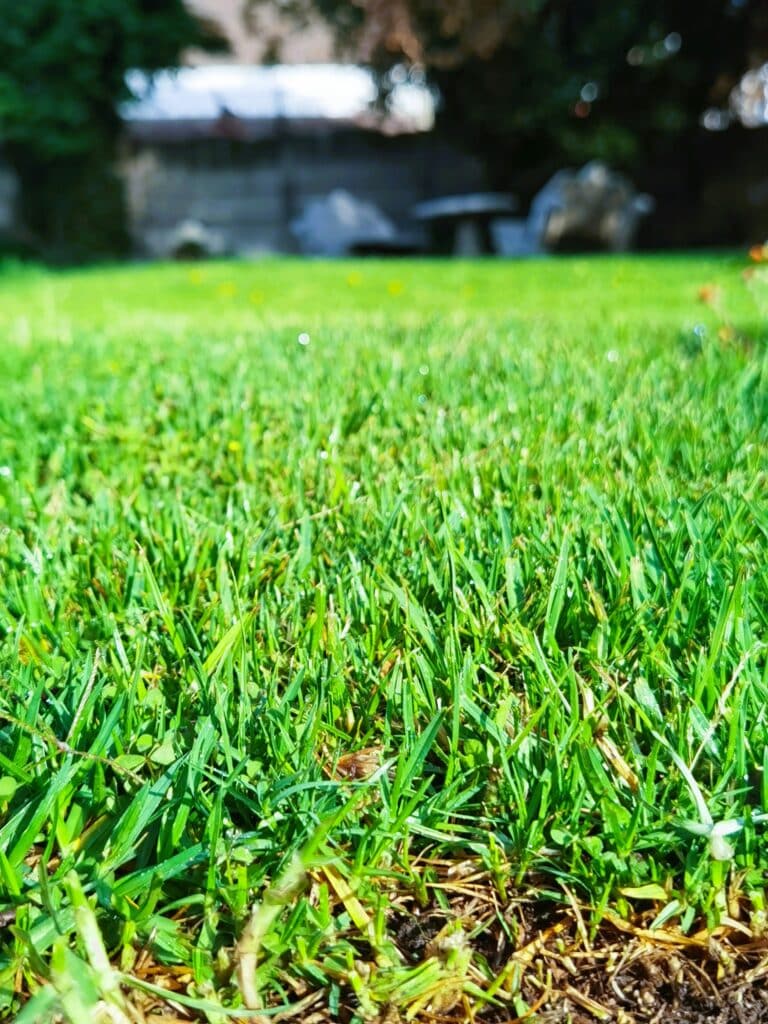
Dallas-Fort Worth lawns live a different life than lawns in almost any other part of the country. Between heavy clay soils in Dallas, sandier pockets around Fort Worth, brutal July heat, and the occasional February ice storm, timing is everything. Apply pre-emergent a week too late and crabgrass wins the yard. Fertilize warm-season turf in January and you feed weeds instead of grass.
This DFW lawn care calendar breaks the year into a clear, month-by-month plan for Bermuda, St. Augustine, and Zoysia lawns across North Texas — including the fertilization, pre-emergent, mowing, and watering moves that actually match our climate.
How to Use This Calendar
- Grass type matters. Most DFW yards are warm-season turf: Bermuda (sun-loving), St. Augustine (shade-tolerant), or Zoysia. Fescue is rare here and follows a different schedule.
- Watch soil temperature, not the calendar. Pre-emergent timing is driven by soil temps at 2 inches. When 5-day averages hit 55°F in spring or drop to 70°F in fall, you're in the window.
- Adjust for your microclimate. Frisco, Plano, and McKinney tend to green up a week later than central Dallas. Southern suburbs like Waxahachie run a week earlier.
January — Dormant Season Prep
Lawns are brown and dormant. Do not fertilize warm-season grass in January; it can't use the nitrogen and you'll only feed winter weeds.
- Sharpen mower blades and service equipment.
- Spot-treat cool-season weeds (henbit, chickweed, poa annua) with a post-emergent labeled for dormant Bermuda or St. Augustine.
- Keep leaves cleared so turf can breathe on warm days.
February — Pre-Emergent Window Opens
This is the single most important month for weed control in DFW. Soil temps typically cross the 55°F threshold in mid-to-late February.
- Apply spring pre-emergent (prodiamine or dithiopyr) between mid-February and the first week of March. Miss this window and crabgrass, goosegrass, and sandbur will be your summer.
- Continue post-emergent spot treatment on winter weeds.
- Mow low one time to remove dead top growth before green-up.
March — Green-Up Begins
Bermuda starts waking. St. Augustine follows a couple of weeks later. Resist the urge to fertilize until the lawn is at least 50% green.
- Set mower to 1.5–2 inches for Bermuda's first cuts; 3–3.5 inches for St. Augustine.
- Overseed thin Bermuda areas late in the month if needed.
- If you missed February pre-emergent, apply now — but expect reduced coverage.
April — First Fertilization
Once the lawn is fully green (usually early-to-mid April in DFW), it's time for the first real feeding.
- Apply a balanced slow-release fertilizer (roughly 3-1-2 or 4-1-2 ratio). A common rate is 1 lb of nitrogen per 1,000 sq ft.
- Begin regular mowing — weekly for Bermuda, every 7–10 days for St. Augustine.
- Watch for brown patch on St. Augustine; treat with a fungicide at first sign.
May — Establish the Routine
Warm-season lawns hit their stride. Mowing frequency and watering matter more than any product you spray.
- Water deeply 1–1.5 inches per week, ideally in one or two long sessions before 9 a.m.
- Raise Bermuda mowing height to 2–2.5 inches; St. Augustine to 3.5–4 inches.
- Spot-treat any escaped broadleaf weeds (clover, spurge, dollarweed).
June — Heat Prep
Summer stress starts. Deep roots built now carry the lawn through July and August.
- Second fertilizer application, again around 1 lb N per 1,000 sq ft. Slow-release only — quick-release nitrogen in June burns turf.
- Check irrigation heads for coverage; DFW summers punish dry spots fast.
- Sharpen mower blades again. Dull blades shred grass and open the door to disease.
July — Survive the Heat
Do not fertilize with high-nitrogen products during peak heat. Focus on water and mowing height.
- Water early morning only. Evening watering encourages fungus in humid stretches.
- Raise mowing height another half inch. Taller grass shades soil, holds moisture, and outcompetes weeds.
- Monitor for chinch bugs in St. Augustine — irregular yellowing patches that spread are a red flag.
August — Hold the Line
The hottest, driest month. The goal is maintenance, not growth.
- Skip fertilizer unless the lawn is under professional irrigation and clearly needs it.
- Continue deep, infrequent watering. Compliance with DFW watering restrictions (typically 2 days per week) is fine if timing is right.
- Treat any active fungal disease (gray leaf spot, brown patch) at first sign.
September — Fall Pre-Emergent
The second critical pre-emergent window. Soil temps drop back through 70°F in mid-September.
- Apply fall pre-emergent (prodiamine or similar) between September 15 and October 15 to block poa annua, henbit, chickweed, and rescuegrass.
- Continue mowing at summer heights until growth slows.
- Fertilize one more time with a balanced product to help the lawn store carbohydrates for winter.
October — Winter Prep
Growth slows. Lawns start moving energy to roots.
- Apply a potassium-forward fall fertilizer (something like 5-10-30 or a "winterizer" ratio). Potassium builds cold tolerance.
- Aerate compacted Bermuda lawns while they can still recover.
- Begin leaf cleanup — a thick leaf layer smothers turf and invites disease.
November — Wind Down
Mowing tapers off. First hard freezes usually arrive mid-to-late month.
- Final mow slightly lower than summer height for Bermuda; keep St. Augustine at 3.5 inches through winter.
- Blow leaves weekly; consider mulch-mowing thin leaf cover into the lawn.
- Spot-treat any emerging winter weeds with a post-emergent.
December — Rest and Plan
Warm-season lawns are fully dormant. This is planning time, not treatment time.
- No fertilizer, no pre-emergent.
- Winterize irrigation to prevent freeze damage.
- Review the year: what worked, what didn't, and where the lawn thinned. Book professional aeration or overseeding for spring.
DFW-Specific Notes That Trip Homeowners Up
- Heavy clay soils across most of Dallas and Collin County compact fast. Annual core aeration in late spring is worth more than any extra fertilizer application.
- Alkaline soil locks up iron. If Bermuda looks yellow despite adequate nitrogen, apply chelated iron rather than more fertilizer.
- St. Augustine hates DFW winters more than Bermuda does. Keep it well-fed in fall and mow high through winter to protect crowns.
- Watering restrictions in most DFW cities allow twice-weekly irrigation. That's plenty if you water deeply and early.
Need Help Staying on Schedule?
Timing every application across a 12-month DFW lawn care calendar is what separates a good yard from a great one. Goat Kings Landscaping runs seasonal programs across Dallas, Fort Worth, Frisco, Plano, McKinney, and the rest of North Texas — pre-emergent windows, fertilization rounds, mowing, and weed control handled on the exact schedule your lawn needs.
Ready to hand off the calendar? Request a free estimate and we'll build a year-round plan for your yard.